
Digestion (catabolism) is divided into two types - the mechanical digestion of food that occurs in the mouth when it is physically broken up into smaller pieces and the chemical digestion that occurs in the gastrointestinal tract when the food is broken down into small molecules by digestive enzymes. Some of the latter are produced by our bodies, others are made by bacteria - by both fermentation and metabolism. Chemical digestion is the process of breaking down complex, insoluble molecules of food into smaller, simpler molecules which can then be readily absorbed by the body.
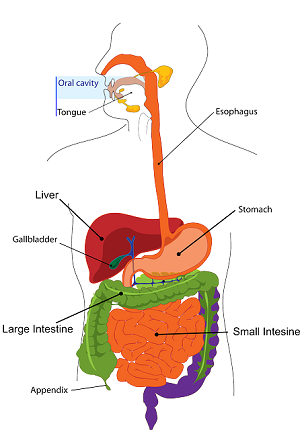
- Eructation (via esophagus and mouth) - H2, CH4, CO2
- Diffusion (via lungs), - O2, CO2, H2 and
- Flatus (via intestines and anus); - N2, O2, H2, CO2, CH4, H2S
Our attention is focused on the latter - how to contain and manage flatus responsibly. Read on for more on , its impact on the enviroenvironment and health.
©2022-23 Flatus Organization, Inc.