
Microbiome

Flatus Microbiome

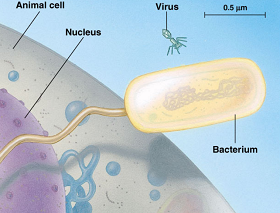
Other than gas, aerosol and hard matter, flatus also contains microbial life. Of the latter, bacteria and viruses are the ones causing diseases in multicellular organisms. Bacteria are single-cell organisms that reproduce asexually independently of other organisms. Viruses require the machinery of a living cell in order to reproduce. Viruses have no metabolic functions and are not fully acknowledged as living organisms as they cannot survive outside a host. Most importantly, viruses are extremely small, measuring 20nm to 400nm in size. This is shorter than the shortest light wavelength a human eye can see, thus we cannot obesrve viruses except with an electron microscope. Bacteria are much larger, measuring 800nm to 60,000nm and can be observed with the help of a light microscope. This diagram is a representation of relative sizes of bacteria and viruses

Bacteria are found everywhere. Disease-causing bacteria are known as pathogens. However some bacteria are very useful, even necessary for the survival of other organisms, for example bacteria in our intestines help us digest food. Well, they create flatus too.

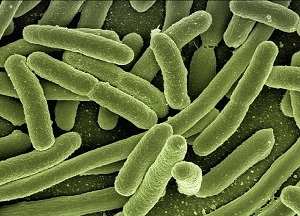
Viruses are always harmful, found everywhere and some can infect even bacteria themselves. Pathogen bacteria cause localized infections, whereas viruses generally cause systemic infections. Thus flatus contains billions of bacteria ("good" and "bad" ones) that may be found in the GET or on skin, and any viruses present in the body. For example, a common pathogen bacteria in human GET - E.Koli form colonies and causes infections when left unchecked by the immune system::
©2022-23 Flatus Organization, Inc.